Tuesday, April 17, 2012

Crits for Water Interview with Intern Brent Taylor


(Or, You Can Call Me Critiquer)

A charity water fact: Every day, women miss work and children miss school just to find water. Filthy water.

Intern and freelance critiquer Brent Taylor would rather these women able to work and their children in school. He'd also like to provide them with clean water, which is why he’s helping the 2012 Crits for Water campaign. He’s donated a 50-page critique of a young adult or middle grade manuscript (available Wednesday, April 18th). Two things about him: he’s super nice and he’s got style.

Say hello to Brent.

~~~


Brent Taylor, former gymnast and definite Kelly Cutrone <3er, loves kids' books and coffee,
and he interns for a literary agent.  
He also blogs about books and occasionally writes.

~~~

NAE: What valuable lesson have you learned from one of your critiquers/beta-readers (feel free to share who it was)?

Brent: I have to give a shout-out to my friend J.H. Trumble, author of DON’T LET ME GO, who has graciously critiqued every piece of writing of mine since the day we met. J.H. has ripped apart every essay, every research paper, and really taught me precision.


NAE: What’s one of the worst mistakes a critiquer can make?

Brent: A big mistake I think is seeing a plot point, or an emotional arc in a story, and mistaking a simple dislike for a weakness. As far as tastes go, we’re all completely different, and every person has a different idea of the perfect story. However, I witness a lot of critiquers pointing out something they didn’t like and illustrating it to the writer as a weakness, when really it’s not—it’s a difference in taste.


NAE: When you critique someone’s work, what is your general process?

Brent: I do whatever the writer asks me to do, so it is case by case, but generally I line edit as I go along, and then I look at the manuscript as a whole and think about all the weaknesses I can pick up.


NAE: Is there one specific thing that you gravitate toward while critiquing (e.g., plot, grammar, characters, emotions, etc.)?

Brent: Definitely characters and their emotions, but I’d like to think I have a good eye for plotting as well.


NAE: Is the process for critiquing different age groups and genres different?

Brent: Why yes, Mary, it is. If I’m reading a YA, I’m more focused on the characters and their emotions. With Middle Grade I’m more hard on the voice and the concept. If I’m reading a, say, adult mystery, I’ll be more hard on the plotting and tension-building.


Crits for Water Quickfires: And, go.


1.    Oxford comma?   Yes, yes, yes. A million times yes.

2.    Should “I like him too” have a comma before “too”?   Depends on personal preference. When I’m texting and in a hurry, the comma goes flying out the window. When I’m all Fitzgerald-y, commas adorn every other word.

3.    Italicize or underline?   Italicize, because the Modern Language Association tells us so.

4.    How do you separate scenes: #, ***, or line break?   Three asterisks centered is industry standard.

5.    What is your favorite verb?   SHOPPING. READING. EATING. All fantastic verbs that hold mightily dear places in my young heart.


~~~

Thanks, Brent! If you’re wondering if the first 50 pages of your YA/MG manuscript has the beginnings of an emotional arc, take a stab at his Crits for Water critique here (on Wednesday, April 18th).


Sunday, April 15, 2012

Crits for Water Interview with Agent Sara Megibow


(Or, Speak to Me)

A charity water fact: 1 in 4 children in Africa die by the age of five from water-related disease.

Sara Megibow wants to save the lives of these children during the 2012 Crits for Water campaign (run by her client) with the help of the online writing community (read: you). Sara told me that she’s excited to help, so much so that she’s donated a 30-page critique to the cause (up for bid starting now: Monday, April 16th).

Meet Sara.

~~~


Sara Megibow is an Associate Literary Agent at the Nelson Literary Agency.
The Nelson Literary Agency specializes in representing young adult fiction,
romance (all genres except category and inspirational), science fiction and fantasy,
commercial and women’s fiction (including chick lit) and high concept literary fiction.
The Nelson Literary Agency is a member of AAR, RWA, SFWA and SCBWI. Submission
guidelines can be found here. Visit Sara’s Publisher’s Marketplace site to learn more
about her personal tastes and recent sales. You can also find her on facebook, and on twitter.


~~~

NAE: What is your favorite thing about writing a critique?

Sara: As an agent, I choose manuscripts from the slush pile when they really speak to me. Yes, I do offer editorial services to my clients, but my mantra in general is that I'm looking for books to sell, not books to edit. So, if I review a manuscript that's great, but not sell-able as is, I don't offer a critique and I pass on representation. That's one difference between an agent and a critique group. However, when I do fall in love with a book and start working with an author, then we talk about the manuscript and I love the process of digging in to see how we can make the work stronger. For me, my favorite part about writing the critique is when the book is speaking to me, I feel connected to it, and there is something obvious that I see and can point out to the writer to make it stronger.


NAE: Why is critiquing important?

Sara: For me, critiquing is important because I am hoping that an author presents to me a polished manuscript. When that happens, then I can offer representation and we can go on to sell books, make money and woo readers. I love it when clients tell me they are part of a strong and helpful critique group - it's a wonderful asset to a writing career!


NAE: Your critique style is like which of the following: Red Pen Editor, Overall Commenter, Supportive Critic, You’ll Know It If I Catch It? 

Sara: Good question! Hmmmm….I guess I'd call myself a supportive critic. I tell my clients that their books are always their art. I may have suggestions, but ultimately it's their work and they can veto my suggestions. If I'm working with an author already, then I do a ton of cheerleading. Lots of "great work" and "you can do it."


NAE: What do your clients tell you they most appreciate about your agenting style?

Sara: I tend to be pretty chatty with my clients. They receive an email from me at least once a week - with sales numbers, submissions updates, subsidiary rights updates, marketing ideas, contract updates, etc. Many authors say it takes forever to hear back and that's true. It's not because agents and editors are drinking martinis all day (I wish), but because we're insanely busy. So, I try to keep my client list small and be as communicative as possible. That's the one thing I can add to this journey called publishing that I feel my clients appreciate.


NAE: Name one of your favorite 2012 books that is coming out or already released.

Sara: I read an advanced reader copy of KEEPING THE CASTLE by Patrice Kindl. It was absolutely hilarious, very smart and one of the best books I've read in years! It's basically a satire of a regency historical romance in which a young woman must marry well in order to support her family, but the mysterious stranger acting as her business liaison keeps getting in the way. I can't say enough good things about this book - if you've ever read an historical romance novel or want a truly unique and literary novel, this is it.


NAE: What specific type/style of manuscript is on your Must Have list this season?

Sara: Excellent question! The answer isn't an easy one though, so here we go...

Anything unique and well-written. I know that feels like a cop-out, but it's the truth. I would sign 10 more urban fantasy authors if the best manuscripts I saw this year were urban fantasy. I don't shop by genre or sub-genre, but rather by quality of writing. If I open a submission and fall head over heels in love, then that's the book for me. I rep science fiction and fantasy of all sub-genres and for all reading ages (except picture book or chapter book). I rep romance (all sub genres except category and inspirational). And I rep young adult and middle grade fiction. So, if it's in one of those categories, I will read the query with relish. After the query stage, my decision is based on quality of writing. This is why critiques help so much - the manuscript must be 99% polished in order for me to offer representation. It's my job then to take it to 100% polished before sending it to editors. Then, the editor will spend just as much (if not more) time making it 101% polished so it can compete in the marketplace.


~~~

Because Sara is so committed to the Crits for Water campaign, this is her second year of participating. Check out her interview from the 2011 Crits for Water campaign here. Thank you, Sara, for this interview and for your dedication to this wonderful cause.

Do you think you have a unique, well-written project to send Sara? Bid on her 30-page critique on Monday the 16th to see how much your work speaks to her. Good luck!


Tuesday, April 10, 2012

Crits for Water Interview: Author/Agent Lucienne Diver


(Or, Enhance the Vision) 
  
On your marks, critiquers/writers. My friend Kat Brauer means to raise $10,000 this year for charity water, and she’s rounded up a wave of authors and agents who’ve offered critiques. That’s right, my comrades-in-ink. You’ll have bucketsful of chances to bid on coveted critiques, while also helping people who will never be able to thank you. Every $20 earned for the campaign provides water for an individual for 20 years.

So, thank you.

As part of the campaign, check back here for critiquerly interviews with the donating authors/agents. I’ve pledged to help spray the news everywhere. And hear this: these people are fantastic.

Ready, set, go.

~~~

A charity water fact: Over a billion people lack safe water. That accounts for one-sixth of the world's population.

That’s why author/agent Lucienne Diver has donated a 20-pagecritique to the 2012 Crits for Water campaign (available now, April 11-12). This woman does it all, and one lucky Crits for Water participant will win Lucienne’s full attention.


~~~


Lucienne Diver is a literary agent with The Knight Agency.  She has over eighteen years experience in the areas of fantasy/science fiction, mystery, suspense, romance and young adult fiction.  She writes the Agent Anonymous articles for the SFWA Bulletin, as well as the Vamped young adult series for Flux Books and the Latter-Day Olympians series for Samhain Publishing, beginning with Bad Blood.  Further information is available on The Knight Agency website: www.knightagency.net, her author site: www.luciennediver.com and her blog: http://luciennediver.wordpress.com.

~~~

NAE: After a writer receives an in-depth critique, what do you recommend in terms of a review/revise process?

Lucienne: I recommend waiting a few days after reading the critique to even begin the revision process.  Let the comments sink in, give your back-brain a chance to work on the solutions.  Also, this gives you the distance to react practically rather than emotionally to comments.  We all want to hear that our work is truly wonderful, and hopefully your critiquer will let you know where things have succeeded as well as where they've failed.  But the real benefit of a critique is discovering weak points so that they can be corrected before they become a reason for rejection.  Review and revision gives the writer a chance to make the work all it can be.  Once you've gone through the revision, read the whole work over again to make sure that you didn't introduce any inconsistencies or redundancies or skip over anything that might have been too overwhelming to tackle the first time through.  You'll be amazed at how many errors remain no matter how many times you've read a work.  The more read-throughs you do, the more you'll catch.

NAE: What is one of the worst mistakes a critiquer can make?

Lucienne:  There are two types of editors or critiquers: those who help the writer enhance his or her vision and those who try to impose their own. Don't be the latter.  Remember, it's not about how =you= would write the work.

NAE: What is your general process when you critique someone’s work?

Lucienne:  Because I represent over forty authors, many of whom write multiple books a year, I don't often get the chance to do a second read before critiquing.  This means that I read once, but very carefully, making notes as I go about inconsistencies, problems, sections that happened too quickly or two slowly and all off that sort of thing.  My approach is different depending on whether I'm reading material that's about to go out on submission or a manuscript that's already under contract.  In the case of the former, I do line and copyedit as I catch things, because I don't want anything at all to distract an editor from the quality of the writing.  On the former, I know that the editor, copyeditor, etc. will sweat the small stuff, and I mostly make comments about bigger issues.

~~~


Thanks, Lucienne. If you’d like Lucienne to enhance your work’s vision with a 20-page critique, follow thedirections here (available April 11th). 

Good luck, save lives, and thank you again.


Sunday, April 1, 2012

Got Critique?

(Or, Crits for Water: Open for Business) 

Hello <waves>. It's been a while since my last post, and I've missed youse guys. I've been busy working on lots of things, mostly raising money for an autism service dog for my son. His safety is top on my list of priorities. The good news: it looks like we're getting his dog in October. <cue celebratory music>

But that's not what I wanted to talk about in this post. There's something urgent going on right now in the world, where lots of kids are not safe because of one basic need. Water.


Which is why I hold young adult author Kat Brauer in the highest esteem as she opens her 2012 Crits for Water Campaign with a new goal: $10,000. You might remember last year when I interviewed some of the authors and agents who donated critiques. Kat has outdone herself this year, and her cast of critiquers begins now and continues through June.

Well, they're back, eager to critique your projects. It's a win-win situation. Donate to save lives and receive valuable feedback on your work.

Check out the schedule of critiquerly offerings and decide which one you'd like. Go on. Save a life or two.

Tuesday, October 25, 2011

And THE PLOT WHISPERER Book Goes To

(Or, Newest Member of the Plotting Club)

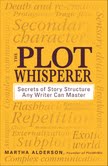
Congratulations to JUDY KOHNEN, winner of Martha Alderson's The Plot Whisperer.

Judy, please send your address to me at mkaley3 (at) gmail (dot) com. You are SO lucky to get this copy. Cue the standing ovation. Thanks, Martha, for the interview and for all the comments to the readers.

And, a few drums are rolling for our informal survey (using the NAE Ninja Science methodology, of course). The question was, are you a Plotter or are you a Pantser. The results:

Plotters: 37.9%
Pantsers: 34.5%
Combo PlotPantsers: 27.6%

Which can only mean one thing. 62% of us really need Martha's book. And the 38% who are plotters? They also crave this book. It's true. Read the comments.


Thanks to everyone for participating. *blows kisses*

Thursday, October 20, 2011

Critiquerly Interview with Martha Alderson

(Or, Whisper Me a Plot and Win a Book)

In my last post, I alluded to the possibility of a Personal Change of Being. I may have just morphed, my fine, fine, writerly friends, from being a pantser to a plot planner. I’ve ripped open the seams of my current WiP, and started to sew a plot structure for not one, but two future WiPs.

And I’m going to share my big secret with you. It’s Martha Alderson, otherwise known as The Plot Whisperer.

I think I first came to know about Martha through a twitter link that took me to her vlog series. I watched the entire series in a day (all 27 of them), and within the next few weeks, I had my entire online critique group involved in a workshop centered around her videos. Some of us are fixing plot problems in current WiPs, and others are getting ready for nanowrimo.

This is why I’m falling over with a general stokedness today. Because Martha is here. On Not an Editor. With her thoughts about critiquing. And? She’s got some thought-provoking answers.


~~~


Martha Alderson has worked with hundreds of writers in sold-out plot workshops, retreats, and plot consultations for more than fifteen years. Her clients include bestselling authors, New York editors, and Hollywood movie directors. She lives in Santa Cruz, CA. Follow her blog, workshops, vlog, or follow her on twitter and faceboook.


~~~

NAE: After a writer gets back an in-depth critique, what would you recommend in terms of a review/revise process?

MA: I suggest that the writer sit with the input for a few days and let the information sink in and feel the effects of the feedback emotionally. Then, based on what the in-depth critique reveals, I suggest that the writer pull out a fresh piece of banner paper and re-plot the entire story on a new Plot Planner, incorporating the feedback that feels valid to her. Then, she can stand back and, minus the words, view her story as a whole and assess how the energy of the story rises and falls.


NAE:  What is the one piece of advice you can give to someone trying to develop his or her critique skills?

MA: Let me answer your question this way, I believe one of the best things a critiquer can do is always to separate the story from the writer. The story is the beginning and middle and end as a whole that involves characters and mostly one character as she is confronted with challenges and undergoes a meaningful transformation. The story is always whole and complete. The writer, on the other hand, in attempting to translate wisps of inspiration to the page is only as good as her current developmental skill level of writing.
When something is not working, it's not the story that is problematic, it is the writer as she continues to grow and study and reach for mastery over the story-telling process.


NAE: When you critique someone’s work, what is your general process?

MA: I never critique writers' work. I have found as a plot consultant to writers that I cannot see the forest (plot and structure) for the trees (words). Plot consultations focus exclusively on the master plot, which is made up of the action, character and thematic plot lines or, in other words, the form and structure. Writers are asked to have on hand a list of scenes from their projects and an idea of the message they are hoping their story will convey.

By pushing aside the words, I am better able to see the deeper structure of the story and assess what is working and what needs work.


NAE: Is there one specific thing that you gravitate toward while critiquing?

MA: I am most interested in how the dramatic action of the story affects the protagonist and how she transforms overtime and what that means overall. Minus the luster of words and phrases is the structure or form of the writer’s expression. Mysteries and depth are hiding in the stories right now. It is in the interlocking plotlines that they reveal themselves.


~~~

Thanks, Martha, for including us in your new book release blog tour, which gives me one last exciting announcement. I have a copy of The Plot Whisperer: Secrets of Story Structure Any Writer Can Master, and I’m ready to send it to one lucky winner. All you have to do is leave a comment below. If you’d like to tweet about this contest, I’ll smile sweetly and say thanks. Mr. Random Generator will pick our winner, to be announced next Tuesday. Of course, now that you’ve met Martha, you may not be able to wait to get her book. You. Want. This. Book.*


And here’s something I’d like to know in your comments today: Are you a pantser or a planner?


*Seriously. You do, you want this book. I’ve kept it by my side when I writer and critique ever since it’s found its way into my hands a few weeks ago.

Tuesday, October 18, 2011

How-tos: Getting Your Full WiP Critiqued

(Or, Network, Plan, and Wait)

Okay. Yes, I know. I’ve been a smidge absent lately. I’m back in the saddle, reading everyone’s blog entries (so many fab ones!), critiquing for my writerly friends, and editing my own writing. I may even get back to Twitter soon (I heart my goat posse!). I’ve been a bit busy with a stuff going on in my real life, and also writing stuff. Writerly speaking, there’s something that has grabbed my attention and forced me to take a new look at the plots in my WiP, and (cue the shock) the plots of my upcoming WiPs. Now, I’ve been a total Pantser (vs. Planner) when it comes to writing. But I might just transform into a Planner, and I’ll tell you why.

But not until Thursday. I’m interviewing the person who has caused this shift in me, the change that’s gotten me soaked in the Planner mode over the past two weeks.

And? I’m going to give away her awesome writerly advice book on Thursday, too. Don’t. Miss. It. You want this book.

But that’s not the subject of this post. I want to dive into full critiques, since I’m doing a lot of them lately. We’ve already discussed chapter-by-chapter critiques, and now it’s time to talk about beta reads. Not the usual how-do-you-critique in beta reads, since I have a couple of posts coming up that will address this, but how to handle the process when your own WiP is ready for betas. If you are an experienced beta critiquer, please (please!) feel free to add and share.


1.       Celebrate. You’ve completed your first draft. Put it away and order a pizza or pour yourself a mug of your best wine. Eat some chocolate (my current fave: Fanny May mint chocolate squares), taking tiny bites and savoring the delicious melting euphoria that only chocolate can offer. Go dancing, sky diving, or some other adequately spirit-bolstering activity. Forget about your draft for at least a week, maybe two. You’re in celebration mode. If you must write, begin a new story.

2.       Read your WiP again. Of course, this step comes after the celebratory step with the week’s worth of wait in between. The best draft to send out to betas is a to-your-knowledge-perfect draft. Or, almost perfect. There might be things that you think can improve, but you can’t put your finger on how to fix it. That’s okay—that’s what critiquerly friends are for But, sentences that are missing words or 987 occurrences of the word very in your text? This is not what you want to burn your beta readers on. You’d like them to focus on those things that you can’t see or fix for yourself. You owe yourself one more read-through.

3.       Network. Hopefully, you’ve been working on your writerly contacts all along. You’ve visited writer’s group websites, blogs, attended conferences, and you know a group of people who you respect, who like you, and who’d love to work with you. In fact, you’d love (love!) to work with them, too. Even if your WiP isn’t quite ready, you can establish relationships and read/comment on other writers’ completed WiPs. It’s time consuming and a whole chunk of work, but the benefits way, way outweigh the drawbacks. Because now? You’ve got your group of serious-minded writers who adore you.

4.       Keep in Touch. When you’ve networked and you’ve done your part in critiquing other WiPs, make sure you keep in touch with these wonderful writerly people until your WiP is ready for them. Let them know every so often where you are with your efforts, and when you think you might need them to beta read/critique.

5.       Plan. As you get to know your critiquerly partners (CPs), you’ll get a general sense of their strengths. You’ll want your critiquerly pie well represented. Some CPs might be better with plot, some with character development. Touch all bases with your betas, and try to do so in logical sequence. Maybe you send your WiP to one or two betas to start, so the next set of betas can focus their specific efforts on a cleaner WiP.

6.       Ask for what you’d like. CP #1 is great with emotions and character depth, so tell her how much you appreciate her talent, and ask her to pay special attention to this in your WiP. Maybe you think you need extra focus on characters X and Z. Ask her. She’ll be happy to give feedback, especially with the green light you’ve flashed her.

7.       Wait. Patiently. It’s a good idea to let your CPs know your overall timeline if you have one, especially if you’re sending beta reads out to phased groups. However, you can’t control what is going on in everyone’s lives. If you haven’t heard from a CP in a long while, check in to make sure they’ve received it without pressuring them to finish. Once you’ve gotten your feedback, wait again before you revise. Let the ideas sink in. The solutions may be utterly obvious, but maybe not. Maybe you’ll come up with a better solution if you let it stew. Put your critiques in the slow cooker and let the ideas waft a while.

8.       Drool with profuse amounts of gratitude. Your fantastic CPs have just read your 50,000-or-so-maybe-more word WiP, have focused as hard as they could on open opportunities in the pages, loved your characters almost as much as you do, and have taken the time to write up their thoughts. It’s a hard thing to do, and it takes skill. Love them for it, and then let them know how much you love them for it.

What else do you do when you send your WiP out for beta reads? I’d love to hear your experiences.